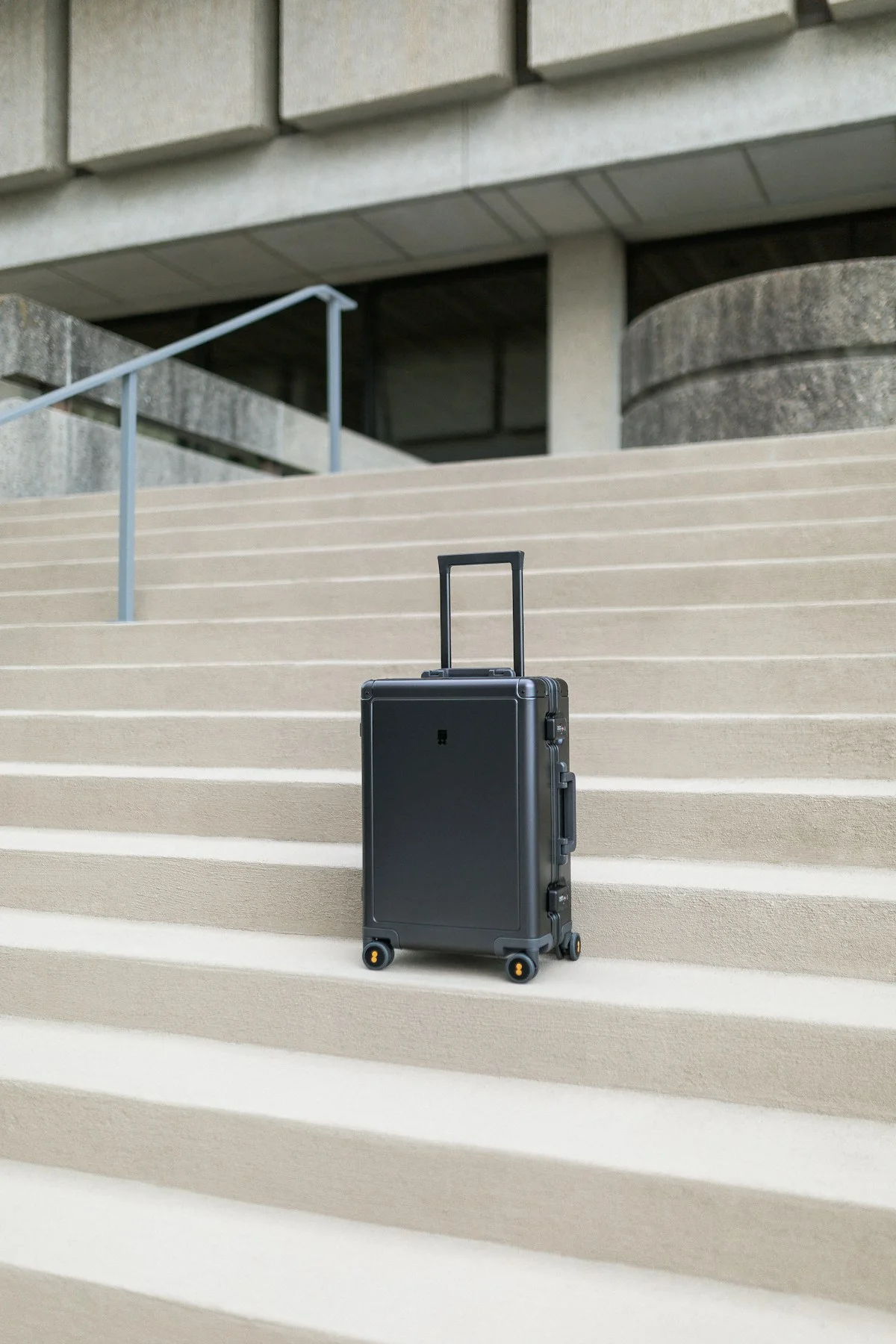
A suitcase can look perfect beside an airport coffee shop and feel completely wrong ten minutes into a walk to a small hotel. The right carry-on starts with your route: how many stairs, how much walking, which airlines and how often you change accommodation. A person taking taxis between airports and large hotels needs a different bag from someone connecting trains through three old town centers.
This guide is a decision framework rather than a hands-on product ranking. Use it to shortlist features, then compare published specifications and inspect a bag in person where possible. Your existing suitcase may already meet the brief. Replacing it makes sense when a specific limitation repeatedly makes travel harder, not simply because a new color appears in a shop window.
Begin with the smallest allowance on your itinerary
Check every operating airline, including regional connections, before buying. Delta's published guidance includes wheels and handles in external dimensions; other carriers and fares may differ. A manufacturer's cabin-friendly label is not a promise that every airline accepts the bag. Measure the full outside shape, including protruding pockets, and repeat the check after packing it.
Write your strictest length, width, depth and weight limits on one sheet. Compare them with overall dimensions rather than internal packing dimensions. Expansion panels can be useful on a road trip, but expanding a bag may take it beyond a flight allowance. If your trip mixes generous and restrictive carriers, buy for the restrictive segment or budget for checking luggage honestly.
Choose wheels for the ground beyond the terminal
Four spinner wheels make it convenient to push a suitcase upright beside you on smooth floors. The tradeoff is exposed wheel hardware and less pleasant movement across broken paving. Two-wheel bags usually tilt behind you and can be easier to pull over uneven surfaces, but they put more of the load through your arm. Neither design removes the need to carry the bag on stairs.
For a taxi-to-hotel business trip, prioritize smooth rolling and a handle that feels stable at your height. For a rail itinerary, lift the loaded suitcase repeatedly before choosing. Check where the side handle sits and whether it allows a comfortable two-handed lift. A beautifully rolling case that is awkward on a narrow staircase is an expensive mismatch for a walk-up apartment.
Hard shell or soft side: compare access first
A clamshell hard case divides belongings between two sides. It gives a clear packing structure, though you need floor or bed space to open it fully. A top-opening soft case can be easier in a small room, and outside pockets can hold a light layer or documents. Those pockets also tempt you to overfill the bag and change its measured depth.
Consider what happens when you arrive before check-in. If you need to retrieve a rain jacket without displaying your clothes in a lobby, an accessible pocket has real value. If your routine is to unpack once and stay a week, the opening style matters less. Shell material alone cannot prove durability; inspect corner construction, zipper movement and the availability of replacement parts.
Spend on repairs and handling, not decorative extras
A useful shortlist includes empty weight, handle adjustment, wheel attachment, zipper access, carry handles and repair support. Ask whether the brand sells replacement wheels and whether a repair requires shipping the whole suitcase. Read warranty exclusions rather than treating a large warranty headline as universal cover. Accidental damage, airline damage and normal wear may be treated differently.
Integrated chargers and elaborate organizers can add complexity without solving your travel problem. A simple separate pouch is easier to replace and move between bags. If a suitcase includes battery equipment, examine the airline's removal requirements and the manufacturer's instructions before flying. There is no reason to pay for an electronic feature you will rarely use.
A practical shop-floor comparison
Bring the shoes and layers you commonly pack, or use a realistic equivalent load. Open each candidate completely, fill awkward corners and check that the zipper closes without forcing it. Roll the bag with the handle at your usual position. Lift it from the floor to a shelf only if you can do so comfortably and safely.
Compare three options rather than twenty: a lightweight simple case, a more repairable case and one with the access features your route demands. Note the actual advantage of the higher-priced choice in a single sentence. If you cannot identify that advantage, the cheaper suitable option deserves serious consideration. Matching luggage sets are optional; usefulness on your next trip is the better buying test.
Packing without filling every gap
Leave room for a light jacket removed during the journey and for the small purchases that tend to appear on the return trip. A bag packed at maximum expansion in your bedroom has no margin for a hurried hotel checkout. Build your clothing plan first, then select the suitcase around that load. Our seven-day carry-on plan explains how laundry changes the calculation.
Questions before checkout
Is a lighter bag always better? Lower empty weight preserves packing capacity, but compare comfort and construction as well. A slightly heavier case with manageable handles may work better than a very light one that twists when lifted.
Should you buy the largest permitted size? Only if your wardrobe and route need it. Smaller luggage is easier to store and discourages packing items you do not use.
When is a backpack a better purchase? When stairs, frequent transfers and rough walking routes dominate, provided carrying the load suits you. Read our backpack versus spinner comparison before choosing. The best luggage decision makes the hardest part of your actual journey easier.