A weekender bag sounds wonderfully simple: a change of clothes, a book and a night away. Then the trip gains a second pair of shoes, a laptop and a rainy walk from the station. The most useful weekend bag is the one you can comfortably carry through that ordinary journey, rather than the one that looks largest on a product page.
Start by deciding whether the bag will travel mainly by car, train or plane. A car trip gives you more flexibility with size and packing shape. A train trip makes carrying comfort and quick access more important. A flight adds specific baggage restrictions. One bag may serve all three, but only if its dimensions and handling work for your most demanding use.
Define the real weekend load
Lay out a typical two-night wardrobe before choosing a bag. Include toiletries, sleepwear, underwear and the shoes you actually need. Add a laptop only if it belongs on this kind of trip. The pile gives you a more honest capacity guide than a label promising room for several days.
Choose clothes that work together and wear the bulkier shoes in transit when practical. If you need separate shoes for a wedding or outdoor activity, give them a defined place. Do not expect a shoe compartment to create extra capacity; it uses space within the same overall bag. A removable shoe pouch may be more flexible when the next trip requires no second pair.
Keep a little room for a layer removed during the journey. A tightly packed soft bag can bulge in ways that change its measured depth. For flights, check the operating airline's current policy and measure the packed bag rather than relying on its empty shape. Delta's baggage guidance is one example of why overall dimensions matter; your booked carrier may use different limits.
Compare opening styles in a small room
A wide opening makes clothes easier to see, while a narrow zipper can leave you fishing around at the bottom. A little structure helps the bag hold its shape when you set it down. Too much structure can make the empty bag bulky to store. Think about whether you will unpack fully or live from the bag for a short stay.
For a one-night hotel stop, quick access to sleepwear and toiletries has value. For a cottage weekend, a bag that opens broadly may be easier to share with a partner. A detachable organizer can help if you move between different bags, but a large collection of fixed compartments may restrict how you pack. Choose the arrangement that suits your belongings rather than reorganizing everything to justify the bag.
Test handles and straps with weight inside
Short handles are convenient from a car to a doorway, but a station walk calls for a different test. Check whether the shoulder strap adjusts far enough for your height and whether the bag hangs comfortably without bumping your leg. A strap pad can help distribute pressure, though its presence alone does not prove comfort.
If you often walk farther, compare a convertible backpack design or a small rolling case. Carrying a large duffel from one shoulder is not the only way to travel for a weekend. Try the loaded option you are considering and notice when you switch hands. A bag that requires constant adjustment may be fine for occasional car trips and irritating for your regular rail journey.
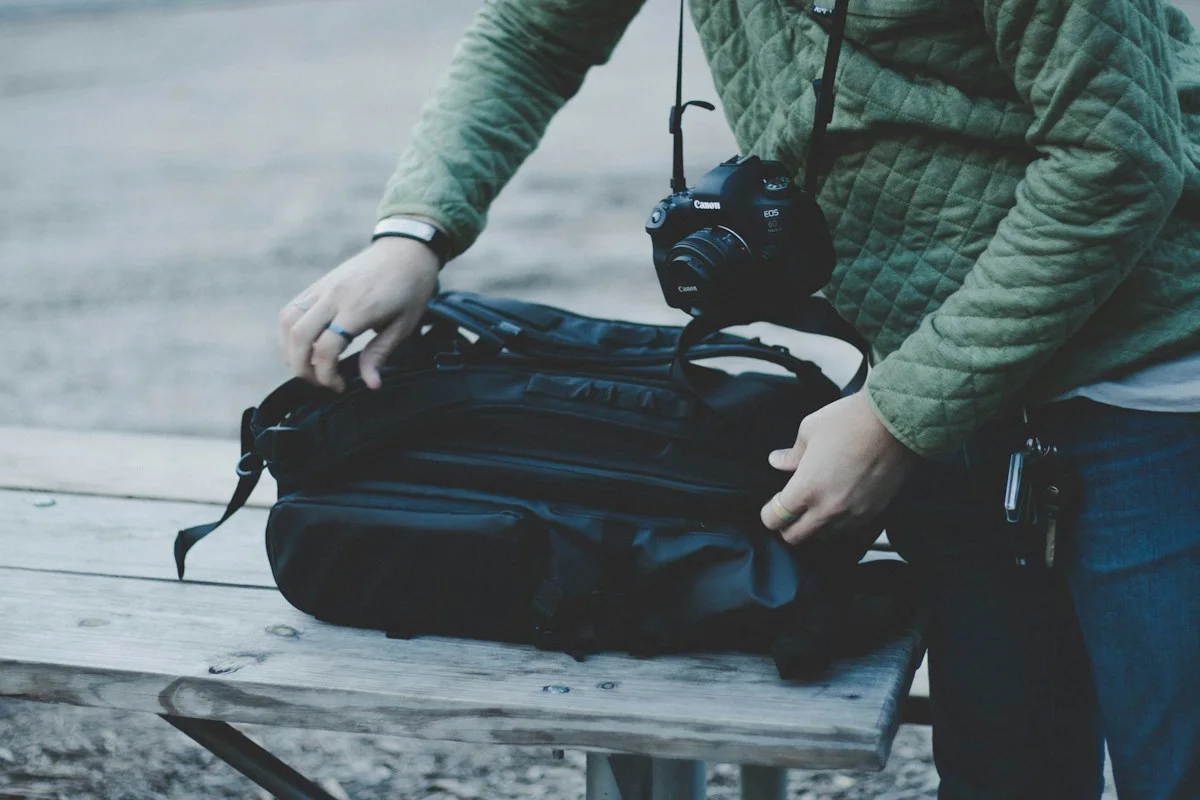
Check how the strap clips attach and whether the handles feel comfortable together. If a luggage sleeve matters to you, test it on your suitcase handle. A sleeve that is too tight or a bag that tips when loaded can undermine the convenience it promises. Remember that the combination still needs to be manageable at steps and ticket barriers.
Choose materials around care and use
A smart finish may suit a hotel weekend, while a simpler washable or wipeable fabric may be easier for a beach or family trip. Read the actual care instructions. Water-resistant wording does not automatically mean you can leave the bag exposed to prolonged rain, and a wipe-clean exterior does not prevent leaks inside.
Inspect the base, zipper and stitching, and ask about repair or replacement support. A reinforced base can be useful when the bag is frequently set on station platforms. Compare empty weight and storage needs before paying for a heavy finish. Materials should serve the way you use the bag, not merely the photograph you have in mind.
Spend on the feature you will use every trip
If every trip includes a laptop, a suitable protected compartment may justify extra cost. If the bag is only for relaxed weekends, that same compartment may consume space unnecessarily. If you frequently arrive before check-in, an accessible pocket for a light layer can be more useful than a concealed compartment you rarely open.
Avoid buying a coordinated travel collection before one bag proves itself. Begin with a realistic shortlist and identify the specific improvement over your existing bag. A better strap, wider opening or clearer repair route is a concrete reason. A vague hope that a luxury bag will make packing easier is less reliable.
A Friday-to-Sunday packing routine
Pack clothing in one soft group, toiletries in a leak-conscious pouch and shoes in a clean barrier if needed. Keep tickets and valuables in a secure accessible pocket or a small separate bag. Put the item you need first near the opening. On Sunday, separate worn clothing before adding any purchases.
After returning, empty the bag completely and follow its care instructions before storage. Leaving toiletries and damp items inside until the next weekend can create avoidable problems. Our packing cube guide can help you decide whether one simple organizer would improve this routine.
Before you buy
Does a weekender count as a personal item? Only when its packed dimensions and your fare's rules allow it. The product name does not determine the allowance.
Is a separate shoe compartment essential? No. It is useful if it matches your usual packing needs; a removable pouch can be more adaptable.
How much capacity is enough? Enough for your actual weekend wardrobe with modest spare room. Test that load before choosing a larger bag that may become uncomfortable to carry.